Interesting Facts
 |
Dinosaurs Few subjects in the natural sciences are as fascinating to the public as dinosaurs. Click on the Tyrannosaurus rex to find out answers to some interesting questions about dinosaurs. |
Approximately 1/3 of the Earth's land surface is desert. This is arid land with meager rainfall that supports only sparse vegetation and a limited population of people and animals. These arid regions are called deserts because they are dry. Some deserts are hot, and some are cold. They may be regions of sand or vast areas of rocks and gravel peppered with occasional plants. But all deserts have very little precipitation.
Mount St. Helens
The catastrophic eruption on May 18, 1980, was preceded by 2 months of intense activity that included more than 10,000 earthquakes, hundreds of small phreatic (steam-blast) explosions, and the outward growth of the volcano's entire north flank by more than 80 meters. A magnitude 5.1 earthquake struck beneath the volcano at 8:32 a.m. on May 18, setting in motion the devastating eruption.
Within seconds of the earthquake, the volcano's bulging north flank slid away in the largest landslide in recorded history, triggering a destructive, lethal lateral blast of hot gas, steam, and rock debris that swept across the landscape as fast as 1,100 kilometers per hour (about 683.1 mph). Temperatures within the blast reached as high as 300 degrees Celsius (about 572 degrees Fahrenheit).
Tsunamis
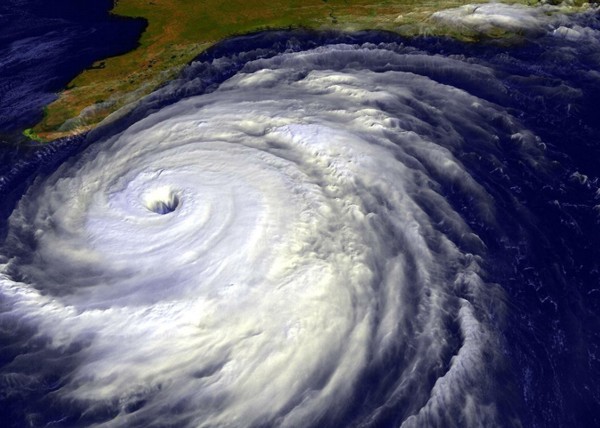 Tsunamis are large, rapidly moving ocean waves triggered by a major
disturbance of the ocean floor. They are usually caused by an earthquake
but sometimes can be produced by a submarine landslide or a volcanic
eruption. Tsunamis are mistakenly called "tidal waves," but they have no
relation to tides.
Tsunamis are large, rapidly moving ocean waves triggered by a major
disturbance of the ocean floor. They are usually caused by an earthquake
but sometimes can be produced by a submarine landslide or a volcanic
eruption. Tsunamis are mistakenly called "tidal waves," but they have no
relation to tides.Ships at sea cannot detect a passing tsunami, nor can the waves be seen from aircraft. While passing through deep oceans, a tsunami consists of a series of waves that are only a few feet high and a hundred miles or more apart. These waves typically travel at speeds of about 600 mph. As they reach shallow water, the waves slow down but greatly increase in height, and the distance between them shrinks. When the tsunami finally strikes the coast, the waves may reach the coast at intervals of 5 to 40 minutes; the first wave is frequently not the largest. Tsunamis range from 10 to 60 feet tall.
| What is... | Answer. |
|---|---|
| Circumference | 6,785 miles |
| Diameter | 2,160 miles |
| Surface area | 14,600,000 square miles |
| Mass | 81,000 trillion tons |
| Gravity | 1/6th that of the Earth |
| Mean distance from Earth (between centers) | 238,857 miles |
| Average orbital velocity | 2,287 miles per hour |
| Orbital distance traveled | 1,500,000 miles |
| Period of revolution and rotation | 27 days, 7 hr., 43min., 11.5 sec. |
| Temperature variation | Lunar "noon" (Full Moon)....243 degrees F Lunar "midnight" (New Moon)....-279 degrees F |

No comments:
Post a Comment